“When you don’t know what you’re living for, you don’t care how you live from one day to the next. You’re happy the day has passed and the night has come, and in your sleep you bury the tedious question of what you lived for that day and what you’re going to live for tomorrow.”
― Ivan Goncharov, Oblomov
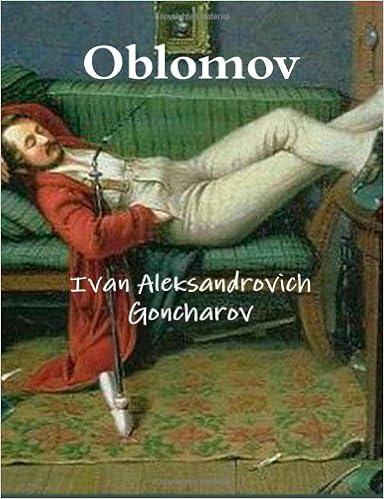
Oblomov can be the most boring novel you read, or it can be the book that lights an escaped ray to a forgotten window of your life. While I was reading this masterpiece seven years ago, I hated Oblomov. During my readings, I often dropped the book in my hand by falling asleep. However, later Oblomov was a half ghost I thought about before going to sleep at nights. Why did he choose that life? Wasn’t he right about many matters? What if I was caught by the Oblomovian syndrome?
The character Oblomov is a man who lives his life without passion, intention, and destination. His means are provided by the farm he had inherited, his house is taken care of by his servant, and his time disappears as he lies in his bed, for what? nothing. Until, there is always an until except in Oblomov’s case, he falls in love with Olga, who the author describes as someone different, someone who has control in her life. And yet, our Oblomov is Oblomov. Even though he tries to follow this spark of passion, his love soon catches stillness like a butterfly put in space. Rather than love, Oblomov chooses to marry someone who cooks, cleans, and spends more than half of his income. I was haunted by how author had described this woman’s arms, the quickly moving plumb, white arms as the attraction while Oblomov was stricken with Olga’s manners and mind. Our Oblomov dies in the house of this convenient woman.
To Oblomov, life is something to endure, even if it is a happy life. Things are only illusions, and they don’t have meanings. To Oblomov, everything is empty.
What made me think of Oblomov today was my late behavior in life. When I am stuck in myself, thinking I am worthless, or life is worthless, I try to imagine myself as a book or movie character. For now, I am a Oblomov with a Oblomovian syndrome.
I think many of us are Oblomovs in some matters, though. When you don’t follow your passion because you are lazy, and you think, “does it worth it?” Does it worth it to feel the ultimate pain of rejection, the exhausting drive of passion, the embarrassment of wanting it more than others? Do I have the strength even? To get up and watch the sun rising for a new day?
“But what was he to do? Stay where he was or move on? This Oblomovian question was for him of even deeper significance than Hamlet’s ‘to be or not to be’.”
Oblomov
 Myshkin Thoughts